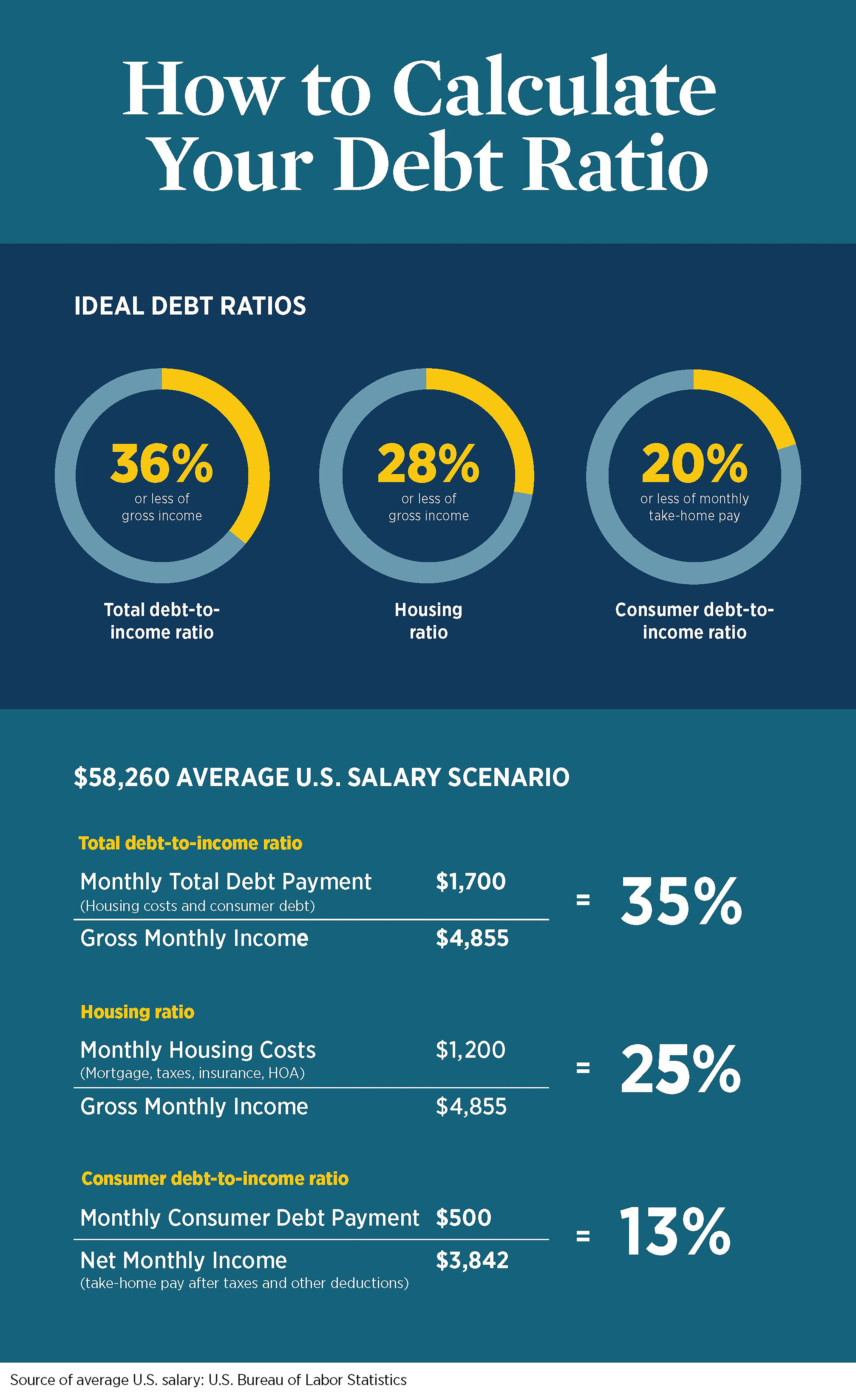
All these percentages are well within the recommended guidelines, and this person can use this information when shopping for a mortgage or other type of loan to determine how the payments will fit into their budget at the current income. Keep in mind, lenders may allow you to borrow more than this, but that doesn't mean you should from a financial wellness perspective.
Consider all your borrowing options
Now that you know your debt-to-income ratio, you have a better idea of how much you can afford to borrow. Even if your percentages are within the ideal range, it's still a good idea to explore all your options to make sure you're not taking on more debt than necessary.
For example, before you make a big purchase on a credit card, see if you qualify for a personal loan at a lower payment and interest rate. You may be able to secure a loan on more favorable terms, giving you more flexibility and costing you less in interest over time.
If you're looking for a mortgage or loan, you can get some preliminary estimates by using a:
It's also important to think about what the long-term cost of borrowing might be. This includes any fees and the total amount of interest that will accumulate while you pay off the debt.
Additionally, try to avoid loans that have penalties for paying the debt off early. Getting out of debt is the goal — you don't want to be penalized when you achieve it!
Stick to your budget
As you consider debt management, project how paying debt off will affect your budget in both the short and long term.
Even when you have debt to pay, be sure to balance the need to also save. If you don't have money set aside in case of unexpected expenses, it might be wise to only pay the minimum amounts on your debt until you've built up that emergency fund to at least $1,000. Without it, you may end up adding to your debt and making it harder to pay off.
Many financial service providers, including USAA, offer ways to help you keep track of your income, expenses and savings, such as online budgeting tools and budget worksheets. This can help you stay focused on your goals, as well as identify areas where you can save money.
Use credit cards sparingly
Some of the hardest to pay off due to potentially higher interest rates compared to other forms of borrowing is credit card debt. Credit cards can offer many benefits and protections that are beneficial, but don't dig yourself into a high-interest debt hole by using credit cards when you should instead use a debit card or cash.
Paying your credit card balance down to zero every month can help you avoid paying interest on any amount still owed, which, over time, may also improve your credit score.
This will give you more options when you want to apply for loans that can help you achieve the goals — a new car, dream home, renovations, etc. — for the lifestyle that you have now and what you want for the future.